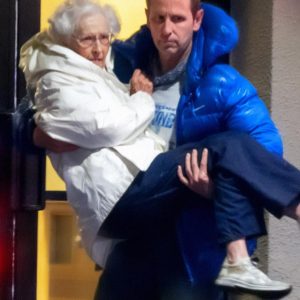
Hours later, as emergency lights faded and dawn crept over the twisted metal, Brazil awoke to heartbreaking news: among the victims was a beloved regional singer whose music had brought comfort and joy to thousands. Grief that began on a lonely highway quickly spread across the nation.
The Night of the Crash
According to preliminary findings from the Civil Police of Minas Gerais (PCMG), the tragedy unfolded in an instant. A heavy cargo truck, loaded and traveling at high speed, drifted across the center line into oncoming traffic. The van, filled with workers returning home to Ceará after grueling weeks on distant job sites, had no time to escape.
Investigators now believe driver fatigue may have played a critical role.
“It was a determining factor,” stated forensic specialist Hugo Leonardo, standing before reporters while emergency crews continued clearing debris behind him. “The tire marks, the drag patterns, the angle of impact—all point to the truck crossing into the opposite lane.”
But numbers and technical terms failed to capture the horror experienced by survivors and witnesses.
One man who happened to be driving just minutes behind the van described seeing “a flash of lights, then everything went dark—like a bomb had gone off.” Another reported hearing cries for help in the darkness as he ran toward the wreckage. “People were stuck between seats, trapped under metal. The smell of fuel… the silence after the screams… it will stay with me forever.”
Within minutes, firefighters from nearby communities arrived, followed by military police, paramedics, and volunteer rescuers. They worked through the night with hydraulic tools and flashlights, fighting time as they attempted to free victims crushed inside the van.
“It looked like a war zone,” said one firefighter. “Phones were ringing inside pockets. Families were calling, having no idea what happened. Those sounds… they were the hardest part.”
A Country in Shock
By morning, images of the accident were everywhere: the shredded remains of the van, the mangled truck cabin, broken glass scattered across wet asphalt. Helicopters hovered overhead. Reporters streamed in. And across Brazil, conversations grew heavy with grief.
Within hours, rumors began circulating about the identity of one of the victims—a singer known throughout the Northeast for his heartfelt lyrics about rural life, love, and the struggles of everyday Brazilians. Soon, confirmation arrived. He had been among the passengers, returning home after a small tour.
The news shattered fans.
Outside his modest recording studio, dozens gathered, leaving candles, flowers, and handwritten messages. One note read: “You sang our stories. Now we carry yours.”
Radio programs played his most famous tracks on repeat. Some callers sobbed on air, remembering how his music helped them through breakups, long commutes, and hard days at work.
“He sang about hope,” said one fan. “And now he’s gone on a road filled with workers like the ones he gave a voice to.”
Survivors’ Difficult Road Ahead
Meanwhile, hospitals across northern Minas Gerais filled with survivors, many in critical condition. Doctors described shocking injuries—fractured ribs, spinal trauma, crushed limbs, internal bleeding. Several passengers remained unconscious for hours after rescue.
“They are alive because of the response time,” said Dr. Luana Reis, head of emergency care at Grão Mogol Regional Hospital. “But their recovery will be long and painful. Physical wounds heal slowly. Emotional wounds sometimes never do.”
Outside hospital doors, families waited with trembling hands and tear-stained faces. Some had driven hundreds of kilometers through the night after receiving frantic phone calls. Many clutched family photos or rosaries as they waited for updates.
One woman sobbed as she spoke to reporters:
“My brother called me right before they left. He said he’d be home by morning. He just wanted to see his kids.”
For many families, dawn brought only unbearable news.
The Investigation
Authorities now face the urgent task of determining exactly what happened. Investigators recovered the truck’s tachograph—a device that logs speed, rest periods, and driving duration—and early analysis suggests the driver may have exceeded federal limits, remaining behind the wheel for more than twelve straight hours.
“This tragedy underscores the urgency of enforcing transport regulations,” said transportation safety analyst Paulo Mendes. “Fatigue kills. Mechanical neglect kills. And our country still treats these violations as minor issues.”
For local officials, the crash represents one more violent chapter in BR-251’s troubled history. The highway, heavily used by trucks, is known for narrow stretches, inadequate lighting, and dangerous curves. Residents have raised concerns for years, often to little effect.
Honoring Lives Lost
Across several towns in Minas Gerais and Ceará, candlelight vigils drew hundreds. Photographs of the victims—construction workers, drivers, two young cousins, and the singer whose voice once filled radio stations—were placed before altars decorated with flowers and handmade crosses.
At one vigil, a priest spoke softly:
“They left this world as companions, as workers, as loved ones. May our memory of them guide our actions so that tragedies like this no longer define our roads.”
The singer’s hometown held a particularly emotional ceremony. His bandmates, weeping openly, gathered around his coffin. One placed a well-worn guitar pick beside him and whispered, “Your music will do the healing now.”
A Call for Change
The tragedy has sparked renewed demands for major safety improvements along BR-251. Activists and local leaders argue that accidents like this are not “fate”—they are consequences of systemic neglect.
“We cannot keep calling these accidents,” said community leader Marisa Azevedo at a town meeting. “They are preventable. They are failures—failures of policy, infrastructure, and enforcement.”
The Ministry of Infrastructure responded with a statement announcing plans to evaluate the affected stretch of BR-251 for repairs, new signage, and additional patrol support. But for families mourning loved ones, the announcement feels too late.