According to the Honduran transport ministry, the aircraft was carrying fourteen passengers and three crew members and was en route to the coastal city of La Ceiba on the mainland. Among the victims were two children, a French citizen, and a U.S. national, local police confirmed. The diversity of those on board reflected Roatan’s status as both a close-knit island community and a major international tourist destination.
The aircraft crashed roughly one kilometer from Roatan International Airport, plunging into the sea just after departure. The surrounding area, known for its coral reefs and crystal-clear waters, instantly became the site of heartbreak and urgency. Residents along the shoreline reported hearing an unusual sound shortly after takeoff, followed moments later by emergency sirens racing toward the coast.
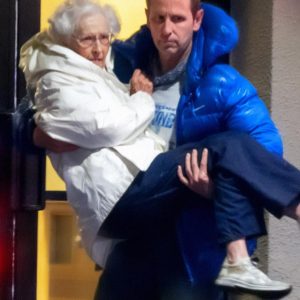
By nightfall, disturbing images emerged from the crash site. Emergency teams worked under torchlight, navigating choppy waters and debris to recover bodies from the sea. The darkness, combined with unstable weather conditions, made the operation painfully difficult. Boats moved slowly through the water, their searchlights slicing across waves as divers and rescue workers searched for any sign of survivors or additional victims.
Rescue operations have faced major challenges due to poor weather and limited visibility. Strong currents, unstable sea conditions, and low light severely restricted what teams could safely accomplish in the first hours after the crash. Franklin Borjas, Roatan’s fire chief, confirmed that search and recovery efforts remain ongoing, with one person still missing as of the latest update. Each passing hour has only deepened the emotional toll on families waiting for news.
For the tight-knit communities of Roatan and La Ceiba, the disaster has felt intensely personal. Many residents either knew the victims directly or were only a few degrees separated from someone on board. On small islands, grief travels fast. Candlelight vigils began forming near the shoreline as people gathered silently, watching rescue boats in the distance and praying for answers.
In response to the disaster, President Xiomara Castro activated the country’s Emergency Operations Committee (COE) within hours of the crash. The coordinated effort brought together the Armed Forces, National Police, Red Cross, Ministry of Health, and multiple emergency agencies. Teams were deployed both at the crash site and at nearby hospitals to ensure that rescue, medical care, and victim identification could proceed with maximum urgency and organization.
All survivors and injured passengers were transported to hospitals in San Pedro Sula and La Ceiba for treatment. Medical staff worked through the night, treating injuries ranging from fractures to severe trauma. Some families learned of their loved ones’ survival through hurried phone calls from hospital corridors, while others faced the unbearable weight of confirmation that their family members were among the dead.
Authorities have launched a formal investigation into the cause of the crash. Aviation experts will examine flight data, weather conditions, aircraft maintenance records, and pilot communications as part of a comprehensive review. While early focus remains on recovery efforts and supporting victims’ families, investigators have emphasized that determining what went wrong will be essential for preventing future tragedies.
President Castro addressed the nation with a message of condolence and unity, expressing her sorrow for the lives lost. “May God protect people’s lives,” she stated, calling the tragedy a national loss. She reaffirmed the government’s commitment to providing full support to grieving families and to ensuring transparency throughout the investigation. Across the country, flags were lowered and moments of silence observed in remembrance.
As Honduras mourns, tributes have poured in for Aurelio Martinez, whose death has left a particularly deep void. Known internationally for his role in preserving and promoting Garifuna culture, Martinez was more than a musician—he was a cultural ambassador, historian, and voice for his people. Through his music, he carried the rhythms, language, and stories of the Garifuna community far beyond Honduras, bringing them to global stages.
His songs blended traditional Garifuna sounds with modern influences, creating music that honored the past while embracing the present. To fans, he was an artist of rare authenticity. To his community, he was a guardian of heritage. Fellow musicians, cultural leaders, and fans across Latin America, the Caribbean, and beyond have shared their grief online, describing his loss as irreplaceable.
For many Garifuna families, Martinez’s music was woven into daily life—played at gatherings, celebrations, and moments of reflection. His passing has therefore felt not only like the loss of a person, but like the silencing of a familiar heartbeat within the culture itself. Plans are already under discussion for memorial concerts and tributes to honor his life’s work.
The crash has also sparked renewed discussion about air travel safety in island regions. Short domestic routes often face unique challenges, including sudden weather changes, limited runways, and heavily trafficked airspace near coastal zones. While air travel remains statistically safe, each tragedy reignites public anxiety and calls for stricter oversight and improved infrastructure.
Tourism officials on Roatan, while respecting the gravity of the event, expressed concern about how the disaster might affect the island’s economy. Roatan relies heavily on international visitors, and incidents of this magnitude inevitably ripple through the tourism industry. Hotels, dive operators, and tour companies have already reported cancellations as travelers reevaluate their plans.
Yet for local residents, economic worries have been overshadowed by grief. In communities around the island, families have gathered to comfort one another, sharing food, prayers, and stories of those lost. Churches opened their doors for emergency services and counseling. In moments like these, the island’s close-knit nature becomes a source of strength as well as sorrow.
The families of the international victims—those from France and the United States—are now facing the added complexity of coordinating with foreign embassies, navigating legal processes abroad, and arranging repatriation. Diplomatic officials have confirmed that consular support is being provided to assist during this difficult time.
For the children who lost their lives in the crash, the sense of heartbreak feels especially heavy. Their futures, filled with possibility only days before, were cut tragically short. In schools across Roatan and La Ceiba, teachers struggled to explain the situation to students who may have known the victims personally. Counselors have been made available to help children process grief in age-appropriate ways.
As night fell again on the island, the sea that had once glittered under moonlight now carried the weight of loss. Boats continued to patrol the area where the plane went down, their engines humming steadily through the darkness. Each recovered fragment, each confirmed identity, brought both answers and renewed sorrow.
The final chapter of this tragedy has yet to be written. Investigators will work for months to piece together what happened in the final moments of the flight. Families will seek closure that may never fully come. And a nation will continue to grieve, not only for the famous figures it lost, but for every life that vanished in the crash.
In the days ahead, memorials will grow—flowers, candles, handwritten notes placed near shorelines and church doors. Music will play in honor of Aurelio Martinez, his voice rising once more through speakers and hearts that are not ready to let it go. His legacy, like the lives of all the victims, will be carried forward through memory, through family, and through a collective promise not to forget.
And as Honduras mourns, the tragedy off the coast of Roatan stands as a painful reminder of life’s fragile balance—how quickly routine can turn into catastrophe, how deeply one moment can alter countless lives, and how even in the depths of grief, people continue to reach for unity, remembrance, and hope.